
Proper Autumn Lawn Maintenance Leads to a Lush Spring Lawn
Fall is critical for prepping your lawn for spring growth, even though growth slows down in autumn. Now is the ideal time to treat your lawn in the fall to promote better weed control, stronger roots, and better nutrient storage. Because everything must take place before the first frost.
A lot depends on your exact location. Generally speaking, warm-season lawns in Texas are impacted by fall weather changes from August to October. Nonetheless, the particular requirements for your fall lawn care are influenced by Dallas’ distinct climate, elevation, typical rainfall, and grass type.
Keep reading for fall lawn maintenance tips to enjoy a healthy yard well into spring! Want the experts to help you? Contact GroGreen for professional lawn care and pest control services!
What to Do About Fallen Leaves?
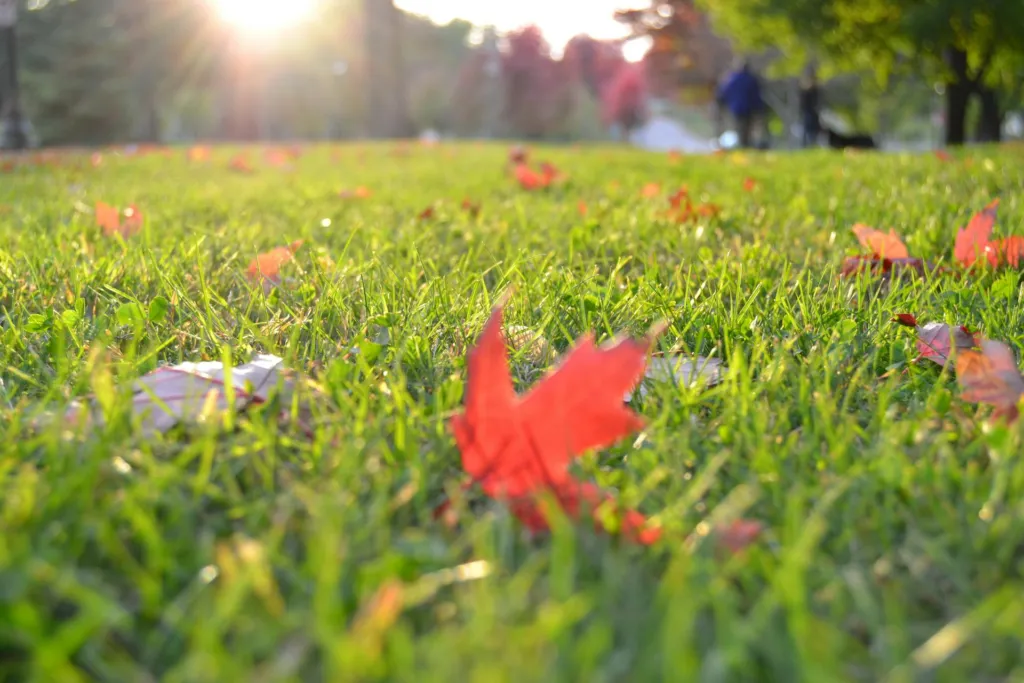
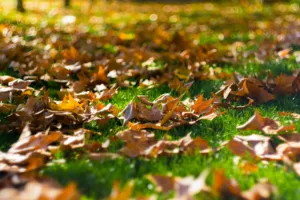
Trees mean leaves. The colors are beautiful, but the mess they create isn’t. Fall leaves actually pose a real threat to your lawn. A layer of leaves keeps sunshine and water from getting to your grass. Instead, it suffocates the lawn, making an inviting place for fungal diseases as well.
Your best options for dealing with leaves? Raking with a rake and then bagging them, or using the more efficient method of mulch mowing.
When mulching leaves, be sure to do it the right way. First, wait until the leaves are dry to mow cleanly. Next, mow often enough so you aren’t tackling huge leaf piles every time.
Attempt to shred them into dime-sized pieces. These smaller fragments will reach the soil surface, decompose, and improve the soil. It’s like a free source of nutrient-rich material similar to a fall lawn treatment!
Best Practices for Fall Mowing in Dallas, TX
Will your grass continue to grow throughout the winter? No! When temperatures get below 50 degrees Fahrenheit, warm-season grasses go dormant, meaning they cease to grow. Therefore, it’s critical to monitor the weather in order to schedule your last mow before winter.
Aim for a height of about 2″ when you mow in September and October. However, leave your grass a little taller, perhaps 3″, for the last cut before winter. This better guards against disease and damage from cold and frost.
When Do I Aerate My Texas Yard?
For warm-season grasses or lawns with compaction problems, liquid aeration is typically suggested. This applies to Bermuda, Zoysia, and St. Augustine lawns.
What’s the best time to aerate in Texas? When these grasses are waking up in late spring or early summer (April to June). Another good time? When the soil is cooler and grass is strengthening its root system in early fall (September to October).
How can you determine whether aeration is necessary for your grass? Keep an eye out for these indicators.
- The grass is difficult for water to absorb
- It feels spongy (could mean there’s too much thatch)
- Fertilizer doesn’t make things better
- Your lawn is sparse or uneven in certain areas
- Compaction is causing moss or weeds to take over
- Your last lawn aeration was at least a year ago
How frequently should your lawn be aerated? Aerate it once a year if your area has clay soil or if children or pets use it. If your yard has sandy soil or little traffic, aerate it once a year or every other year.
Professional experience is better if:
- You have a larger yard
- There’s extreme compaction or thatch
- You care about your lawn’s overall health
- You want to use your time on something you enjoy instead of sweating!
Here’s when it may make sense for DIY aeration:
- Smaller yards
- You want to spend less but work harder
- You’re comfortable with rental equipment
- You’re strong enough to use heavy equipment
How Do You Get Rid of Fall Weeds?
Eliminating broadleaf weeds such as dandelions, crabgrass, clover, and others is best done in the fall. Before winter arrives, those weeds store nutrients in their roots. Spraying herbicides in fall means weeds will absorb the weed killer as well.
Pre-emergent herbicides prevent weed seeds from sprouting by forming a barrier in the soil. This strategy’s timing is crucial because the pesticide needs to be applied before the temperature rises and weeds begin to grow again.
Therefore, pre-emergent herbicides are a great way to treat your lawn in the fall. When winter arrives and the temperature drops, many warm-season turfs go dormant. With the help of these herbicides, grasses will be protected from potential weed growth in the upcoming months.
Post-emergent herbicides work on weeds that you can already see. They’re scattered directly onto the leaves of weeds that are growing. This kind of weed control may use spot spraying to treat individual weeds. On the flip side, broadcast spraying attacks a whole area where weeds may or may not be present.
What’s the Purpose of Dethatching?
Thatch regulates the soil’s temperature and helps with moisture retention, kind of like mulch. Soil microbes break down the organic material, returning nutrients to the soil. In short, thatch can decrease water loss through evaporation, improve soil tolerance to temperature swings, and lessen compaction.
The perfect amount of thatch? About 1/2 inch. Any more than that can end up hurting rather than helping your grass.
So what does lawn dethatching do? It improves water infiltration and nutrient absorption. Plus, it gets your grass ready for new growth!
However, don’t forget that dethatching can stress your grass. That means it should only be done when your lawn is healthy and prepped for a fast recovery. Therefore, the best time to dethatch warm-season lawns is in the late spring. In addition, a light fall dethatching is helpful as well.
Best Fall Watering Tips
In general, for the best fall watering, you should either water your lawn in the evening or the early morning. This helps reduce the effects of evaporation and discourages fungal diseases.
Remember to also water deeply and infrequently. This promotes deeper roots because it soaks the soil multiple inches down. Lighter daily sprinkles won’t have the same positive impact.
As grass decreases its growth rate in autumn, simply update your watering schedule. At the same time, a consistent schedule helps fortify new plants and prep existing ones for colder weather.
When winter arrives, be sure to adjust your watering based on Texas’ weather. Until the first freeze, you can actually continue watering. This helps avoid dry soil and protects the roots from damage.
When should you expect the first freeze in your area? Enter your zip code into this frost calculator to get an idea of the dates it typically happens near you.
Choosing the Best Fall Fertilizer
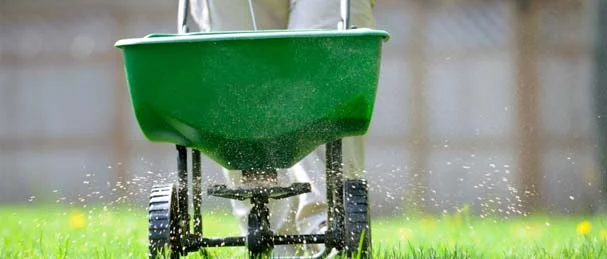
It’s time to help your lawn recover from summer stress, prep for winter, and get set up for a healthy return in spring. When it comes to timing your fall fertilization, aim for a month or two before the first frost. Balanced fertilizers with potassium and nitrogen should be your go-to in autumn.
Potassium strengthens your lawn against drought and disease, giving it the resilience and prolonged health it needs to get through colder months.
As for nitrogen, it can improve your lawn’s density and aid in spring recovery. However, remember that applying it too late can harm warm-season grasses by delaying dormancy, which puts the turf more at risk when the first frost comes.
All About Soil Tests & pH Levels
Moderate fall temperatures combined with rainfall provide an ideal opportunity for soil amendments to work their magic. Testing is easy. In fact, you can get a DIY kit or send a sample to your local cooperative extension office to get a more in-depth analysis. Your test results will reveal both the pH and nutrient profile of your soil and give you a roadmap to understand what to do next.
If your results show that your soil is too acidic, fall is the best time to apply lime, which slowly moves down through the soil to change the pH over time. If your soil is too alkaline, sulfur can help to improve it.
Fall Lawn Maintenance FAQs
What’s the best fall fertilizer for my grass type?
A soil test can help determine this. The optimal ratio of nitrogen, phosphorus, and potassium required for your particular warm-season grass will usually be suggested by this type of test. In general, fall fertilizers should concentrate on potassium and nitrogen since they better prepare your turf for winter conditions.
When should I stop watering my lawn?
You can continue watering in the early morning (to prevent disease) in fall, but should stop watering once temperatures are consistently below 40 degrees Fahrenheit.
Should I remove clippings in fall?
If you have a lot of clippings, you can bag them to eliminate the risk of grass suffocation or disease. Smaller clippings are advantageous because they replenish the soil with nutrients.
Last Lawn Care Checklist Prior to Winter
It makes a significant difference to finish a few last-minute tasks before the winter freeze. This gets you set up for a smooth start in spring. Your end-of-season checklist should be based on this fall lawn care schedule.
- Cleaning and storing your lawn tools to prevent rust and damage
- Doing a final mow and possibly bagging the clippings to remove any disease spores
- Mulching the last thin layer of fallen leaves to add organic matter without suffocating the turf
- Setting up your lawn care calendar for spring so you’re prepared to start fertilizing and applying pre-emergent at the proper times
Your hard work today will pay off when your grass begins to green up again in a few months!
Fall Lawn Care Is Key!
To get the best yard possible in the Dallas-Fort Worth area, there are essential steps you should take each season. Fall is no exception! To maintain healthy grass today and prepare for a gorgeous lawn next year, follow our fall lawn care tips!
Interested in a professional fall lawn treatment service? Reach out to GroGreen today!
We proudly serve the greater DFW area, ensuring high-quality lawn care and pest control services for these communities:
- Allen, TX
- Carrollton, TX
- Coppell, TX
- Fairview Farmers Branch, TX
- Flower Mound, TX
- Frisco, TX
- Lucas, TX
- McKinney, TX
- Murphy, TX
- Parker, TX
- Plano, TX
- Prosper, TX
- Richardson, TX
- Sachse, TX
- St. Paul, TX
- The Colony, TX
- Wylie, TX
Blog Contributor: James Duhon
James Duhon serves as Branch and Area Manager for GroGreen in Plano, with 20 years of experience. He is licensed by the Texas Department of Agriculture for both lawn care and structural pest control. His background gives him a strong perspective on service standards, customer satisfaction, team leadership, and practical lawn and pest care expertise.