

Nutsedge in Your Lawn: Signs and Professional Treatment Options
Posted on October 30, 2024
Nutsedge is a pesky weed that can take over your lawn if not dealt with properly. It isn’t grass, even though it looks like it. Nutsedge grows faster than regular lawn grass and can make your yard look uneven and messy. Understanding what nutsedge is and how to identify it can help you keep your lawn looking its best.
Nutsedge is tricky because it spreads quickly through underground tubers called nutlets. These nutlets make it hard to kill nutsedge with regular weed killers. Spotting nutsedge early is key to stopping it from spreading. But how do you tell it apart from your grass? Knowing the differences can make a big difference in your lawn care routine.
In this blog, we’ll cover everything you need to know about nutsedge. You’ll learn how to identify it, why it’s a problem, and how to get rid of it effectively. With a little bit of knowledge, you can keep your lawn healthy and nutsedge-free.
What Is Nutsedge?
Nutsedge is a resilient weed that often invades lawns and gardens. Also known as nutgrass, it looks similar to grass but is actually a member of the sedge family. Nutsedge grows quickly and can outcompete your lawn grass, making it difficult to control.
This weed thrives in moist, poorly-drained soils and can be identified by its triangular stems and light green leaves. Unlike grass, nutsedge has a more upright growth habit, and it reproduces through underground tubers called nutlets. These nutlets store energy and allow the weeds to spread rapidly, even after the visible parts have been removed.
Understanding what nutsedge is can help you identify and manage it more effectively. While it might seem harmless at first, nutsedge can quickly take over and damage the health and appearance of your lawn.
How to Identify Nutsedge in Your Lawn
Identifying nutsedge in your lawn is the first step to controlling it. Here are some signs to look for:
Signs of Nutsedge: 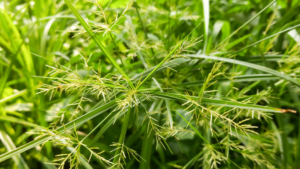
- Triangular Stems: Check the stem by rolling it between your fingers. If it feels triangular rather than round, it’s likely nutsedge.
- Light Green Color: Nutsedge is usually a lighter green compared to most lawn grasses.
- Rapid Growth: Nutsedge grows faster than regular grass, making patches of it stand out in your lawn.
- Tall and Upright Blades: The blades of nutsedge grow tall and do not bend as easily as grass blades.
Key Identification Tips:
– Leaf Arrangement: Nutsedge leaves are arranged in sets of three around the stem, unlike grass, which usually has leaves in pairs.
– Nutlets: If you dig up a plant, you might see small, brownish tubers—these are the nutlets that allow nutsedge to spread.
By learning these differences, you can quickly spot nutsedge and take steps to remove it before it spreads.
Differences Between Nutsedge and Grass
While nutsedge and grass can look similar, several key differences can help you tell them apart:
1. Stem Shape:
– Nutsedge: Triangular stems.
– Grass: Round or flat stems.
2. Leaf Color:
– Nutsedge: Typically a lighter green.
– Grass: Varies but generally darker green.
3. Growth Habit:
– Nutsedge: Grows upright and fast, often outcompeting grass.
– Grass: More uniform and slower-growing.
4. Root System:
– Nutsedge: Has underground tubers called nutlets.
– Grass: Has fibrous root systems without tubers.
Understanding these differences helps you identify nutsedge more easily and take appropriate action to control it.
Why Is Nutsedge a Problem?
Nutsedge is more than just an eyesore; it poses several problems for your lawn and garden:
1. Rapid Spread:
– Nutlets: The underground tubers allow nutsedge to spread quickly and make it hard to eradicate.
– Competition: Nutsedge can outcompete grass for nutrients, water, and sunlight.
2. Lawn Health:
– Weakens Grass: Nutsedge’s rapid growth can weaken your grass, making your lawn look patchy and uneven.
– Moisture Issues: It thrives in wet conditions and may indicate poor drainage in your lawn.
3. Difficulty in Control:
– Resistance: Nutsedge is resistant to many common herbicides.
– Resilience: Even if you pull it out, the nutlets can remain in the soil and sprout new plants.
Due to these challenges, professional treatment is often the most effective way to manage nutsedge and keep your lawn healthy.
Common Myths About Nutsedge
There are several myths about nutsedge that can lead to ineffective control methods. Clearing up these misconceptions is vital for properly managing this stubborn weed:
Myth 1: Mowing Will Get Rid of Nutsedge
Reality: Regular mowing only trims the tops of the plants. It doesn’t affect the underground tubers, which will continue to grow and spread.
Myth 2: Nutsedge Only Grows in Wet Conditions
Reality: While nutsedge thrives in moist soil, it can also adapt to dry conditions. Proper drainage helps, but it won’t eliminate nutsedge alone.
Myth 3: Any Weed Killer Will Work
Reality: Many common herbicides are ineffective against nutsedge. Specialized treatments are necessary to target the nutlets below the soil.
Myth 4: Pulling Nutsedge by Hand Works
Reality: Hand-pulling often leaves the nutlets behind, which will sprout new plants. This method is labor-intensive and usually temporary.
Knowing the truth about these myths allows you to take more effective actions against nutsedge and avoid wasting time on methods that don’t work.
Manual Removal Methods
Manually removing nutsedge can be a tricky process, but it can be effective if done correctly. Here are some steps:
Steps for Manual Removal:
- Water the Area: Moist soil makes it easier to pull the entire plant, including the roots and nutlets.
- Use a Weeding Tool: A specialized weeding tool can help you dig deep enough to reach the nutlets.
- Pull Slowly and Firmly: Try to remove the entire root system. Tugging too hard can break the roots, leaving pieces behind that might regrow.
- Dispose Properly: Don’t compost the pulled plants. Bag them and dispose of them to prevent regrowth.
Manual removal can be effective for small infestations but may not be practical for larger lawns. This method requires diligence and attention to ensure the nutlets are removed completely.
Homemade Solutions: Do They Work?
Many homeowners look for DIY solutions to control nutsedge, but their effectiveness is often questionable. Here are some common homemade methods and their pros and cons:
1. Vinegar Solution:
– Pros: Easy to apply and inexpensive.
– Cons: Vinegar might kill the visible parts of the nutsedge but usually doesn’t affect the underground nutlets, leading to regrowth.
2. Salt Water:
– Pros: Can dehydrate the plant.
– Cons: Salt can damage your soil, making it inhospitable for grass and other plants in the future.
3. Boiling Water:
– Pros: Effective at killing the above-ground part of the weed.
– Cons: Doesn’t reach deep enough to kill nutlets and can harm nearby grass.
4. Baking Soda:
– Pros: Safer for the environment.
– Cons: Generally ineffective at targeting the nutlets.
While these solutions might offer a quick fix, they rarely provide long-term results. DIY methods often require repeated applications and can harm your lawn if not applied carefully. For sustainable and effective nutsedge control, professional treatment options are generally more reliable.
Benefits of Professional Nutsedge Treatment
Professional nutsedge treatment offers several advantages over DIY methods, providing a more effective and long-term solution to your lawn problem. Here are the main benefits:
1. Expertise:
– Accurate Identification: Professionals can quickly and accurately identify nutsedge and assess the extent of the infestation.
– Customized Treatment Plans: They develop a treatment plan tailored to your lawn’s specific needs and conditions.
2. Effective Products:
– Specialized Herbicides: Professionals have access to high-quality herbicides that are specifically designed to target nutsedge and its nutlets.
– Safer Application: They know how to apply treatments safely and effectively, minimizing the risk to your lawn and surrounding plants.
3. Long-Term Results:
– Root System Targeting: Professional treatments focus on destroying the entire root system, preventing regrowth.
– Prevention Strategies: They offer advice and strategies to help prevent future infestations, such as proper lawn care practices and drainage improvements.
By choosing professional nutsedge treatment, you can ensure your lawn will be healthier, with fewer chances of nutsedge returning. This approach provides peace of mind and allows you to enjoy a beautiful, well-maintained lawn all year round.
How Professionals Treat Nutsedge
Professionals have proven methods to effectively treat nutsedge. They start by assessing your lawn to determine the extent of the infestation and the best treatment plan.
- Herbicide Application: Certified lawn care experts use selective herbicides specifically designed for nutsedge. These herbicides target nutsedge without harming your grass. Applying herbicides requires precision and knowledge about the best time for application, usually when nutsedge is actively growing.
- Cultural Practices: Professionals also recommend cultural practices to get rid of nutsedge, such as proper mowing, watering, and fertilizing. Adjusting these practices can create an environment less favorable for nutsedge growth.
- Monitoring and Follow-up: Treating nutsedge isn’t a one-time job. Professionals will monitor your lawn’s progress and offer follow-up treatments if needed. This ensures the nutsedge doesn’t return and your lawn remains healthy.
Safety Concerns with DIY vs. Professional Treatments
Safety is a big concern when dealing with pest control. Here’s a look at why professional treatments are generally safer:
- Chemical Handling: Professionals are trained in handling and applying herbicides safely. They know the correct dosages and the right conditions for application to avoid harming the environment, pets, or people.
- DIY Risks: Without proper knowledge, DIY treatments risk overuse or misuse of chemicals, which can lead to lawn damage, personal injury, or exposure to toxic substances.
- Eco-friendly Options: Many professionals use eco-friendly products that effectively target nutsedge without harmful side effects. They can select treatments that are safer for your family and pets, providing peace of mind.
Maintaining a Healthy Lawn to Prevent Nutsedge
A strong, healthy lawn is the best defense against nutsedge. Here’s how to maintain one:
- Proper Mowing: Mow your lawn at the recommended height for your grass type. Taller grass creates shade, making it tougher for nutsedge to thrive.
- Adequate Watering: Water deeply but less frequently to promote deep root growth. Nutsedge prefers wet soil, so avoid overwatering your lawn.
- Regular Fertilization: Feed your lawn with the right nutrients. Follow a fertilization schedule based on your grass type and local climate to keep your lawn lush and healthy.
- Aeration and Overseeding: Periodically aerate and overseed your lawn to reduce soil compaction and fill in bare spots. This helps your grass outcompete weeds like nutsedge.
Conclusion and Next Steps for a Nutsedge-Free Lawn
Achieving a nutsedge-free lawn requires a mix of proper lawn care techniques and, when necessary, professional intervention. Identifying nutsedge early and taking prompt action can prevent it from spreading and becoming a bigger issue. Regular maintenance and a proactive approach to lawn health are crucial in keeping nutsedge and other weeds at bay.
For those dealing with a persistent nutsedge problem, professional treatment offers a reliable solution. Experts know the most effective methods for long-term control and can ensure safer application of treatments.
Are you ready to take the next step towards a nutsedge-free lawn? Contact GroGreen today to discover how our professional nutsedge treatment services can help you achieve a healthy, beautiful lawn.