
Learn About the Life, Dangers & Appearance of These Insects
Sometimes you may come across hundreds of winged insects coating every surface in sight. These swarming pests are called mayflies. Fortunately, they’re harmless. No biting, stinging, or diseases. But “harmless” doesn’t mean “not annoying.”
Whether you’ve seen lots of them near your home or just want to learn more about those flying bugs that show up every spring, the pest control experts at GroGreen are sharing all the dtails on mayflies. So keep reading to learn more!
What Are Mayflies?
Despite what the name might suggest, mayflies aren’t true flies at all. They belong to the insect order Ephemeroptera and are actually closer relatives of dragonflies than of the houseflies or mosquitoes most people picture.
Across different parts of the country, people call them by different names: shadflies, lakeflies, and dayflies. But they’re all the same creature showing up under different aliases.
One thing that doesn’t get enough attention is how valuable mayflies are to the surrounding ecosystem. In the Dallas-Fort Worth area, they play a meaningful role as a food source for fish, birds, and bats. Even more interesting? When mayflies are thriving in a body of water, it usually means that water is in good shape. A swarm on your back patio is aggravating, no doubt. Ecologically speaking, however, it’s actually a good sign.
What Do Mayflies Look Like?
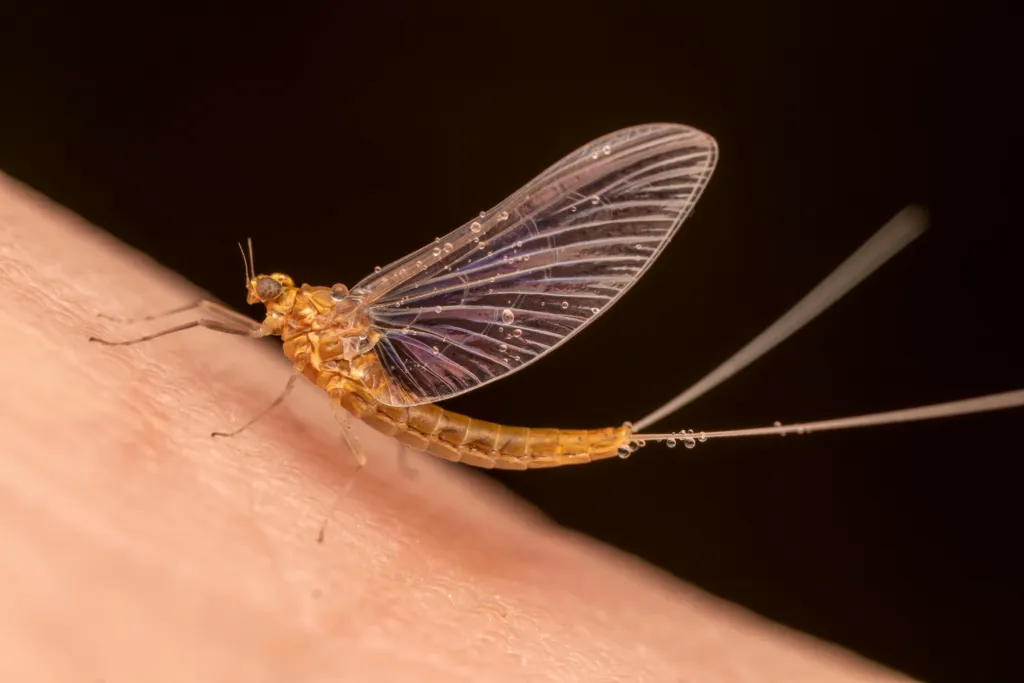
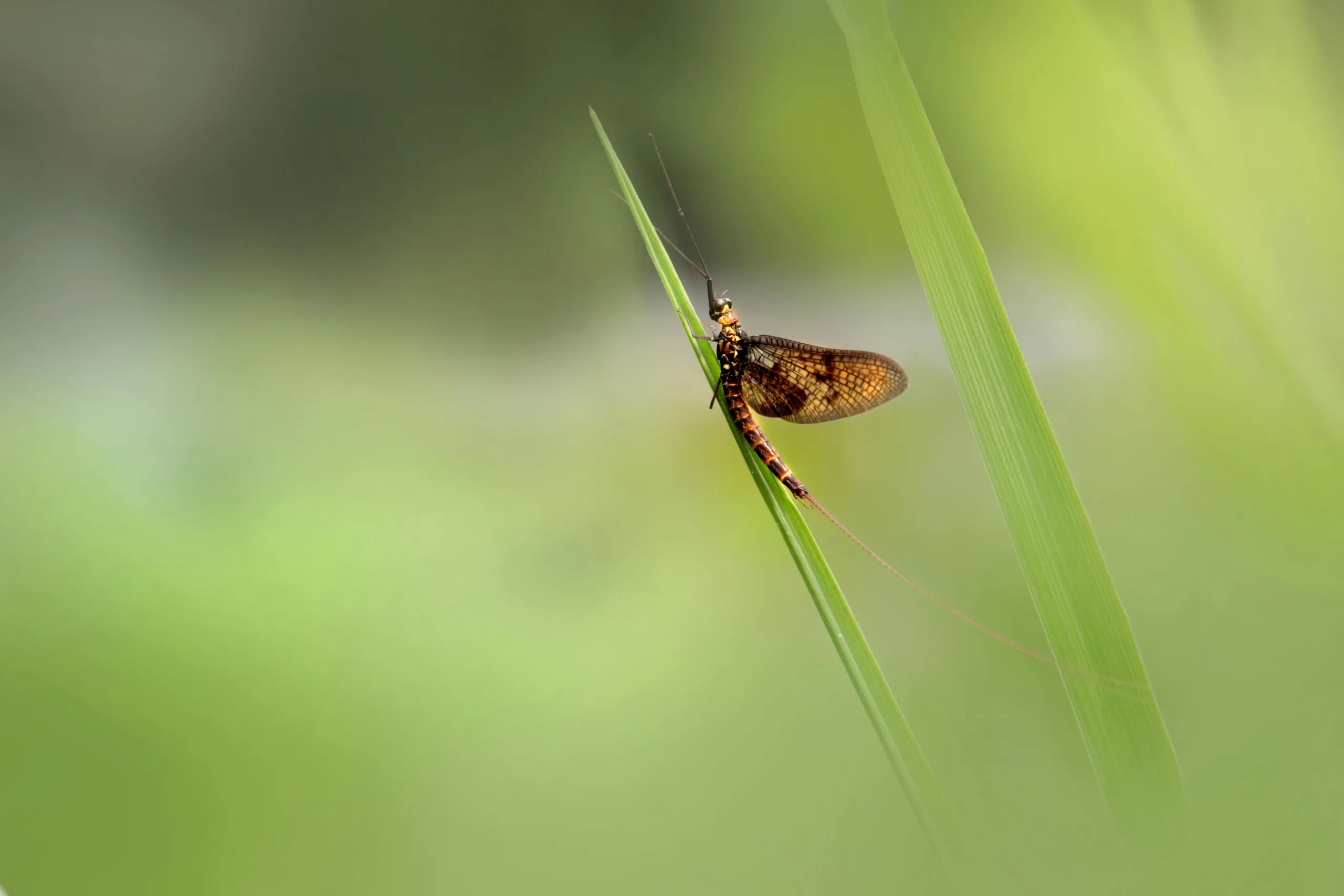
Once you’ve seen a mayfly up close, you won’t forget it. The most distinctive feature is how they hold their wings — angled upward in a tent-like position rather than lying flat against the body. Add in those long, thread-like tail filaments trailing behind them, and there really isn’t another insect quite like it.
- Two or three long tail filaments called cerci
- Four clear, veined wings held upright when at rest
- Large, prominent compound eyes
- Size: roughly ¼ inch to just over 1 inch long
- Slender body with a long, tapered abdomen
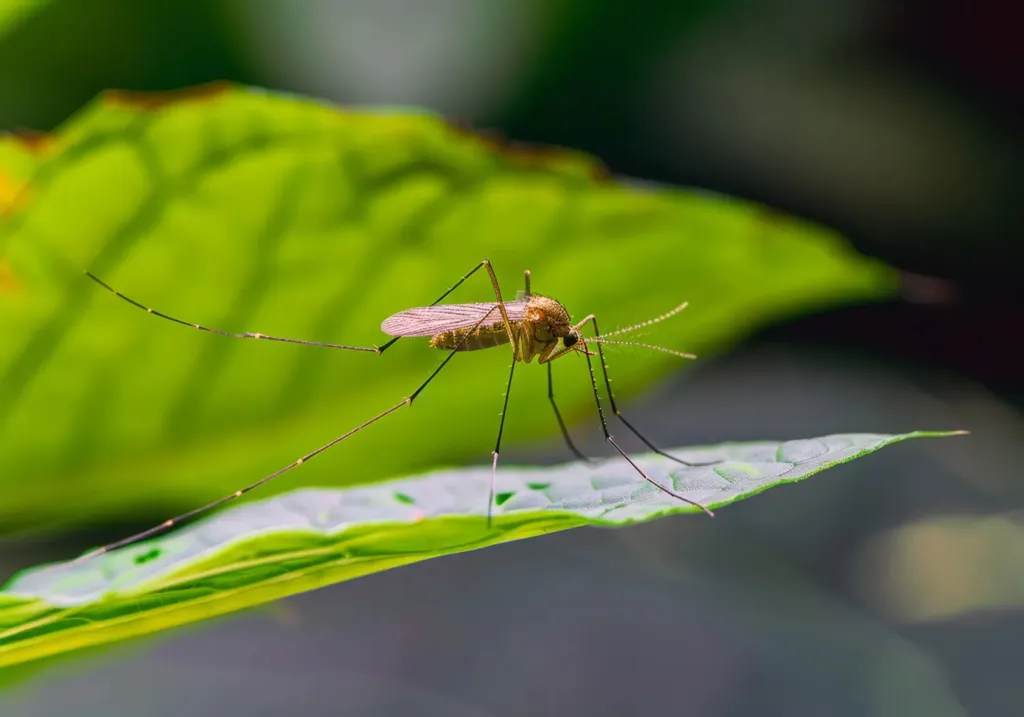
Mosquitoes and crane flies are the two insects people mix them up with most. The distinction isn’t hard once you know what to look for. Mosquitoes carry a thin, needle-like feeding tube called a proboscis. Mayflies have no mouthparts at all. Crane flies run larger, with a gangly build and wings that lay flat at rest rather than pointing skyward. Upright wings plus tail filaments? That’s your mayfly.
Worth mentioning: juvenile mayflies, called nymphs, bear almost no resemblance to the adult form. They’re chunkier, darker in color, and have visible gills running along their abdomen. Unless you’re wading through a creek, you’re unlikely to cross paths with them.
Is It a Mayfly or Another Insect?
Mayflies or Mosquitoes? The confusion is understandable — both tend to appear near water and swarm in large numbers. But the distinction matters. Mosquitoes bite; mayflies physically cannot. That’s a big reason why professional mosquito control is worth investing in while mayfly control largely isn’t. At rest, mosquitoes fold their wings flat along their bodies. Mayflies hold theirs upright like small sails catching wind. Get close enough and you’ll spot the mosquito’s piercing mouthpart.
Mayflies or Midges? If you’re convinced you were bitten during a mayfly swarm, midges are almost certainly the real offender. These small insects often share the same habitat, emerge around the same time, and can look similar at a glance. Several midge species do bite, and they’re small enough to go unnoticed in a crowd of larger mayflies. If welts are showing up, don’t blame the mayfly.
Mayflies or Crane Flies? Crane flies are those oversized, spindly insects that make people instinctively duck. You may have misidentified them before as massive mosquitoes. They’re noticeably bigger than mayflies, lack the trailing tail filaments, and rest with wings spread flat. Neither species bites, but crane fly larvae can feed on grass roots, making them an occasional lawn concern. Mayflies, by contrast, cause zero turf damage at any life stage.
How Long Do Mayflies Live?
The Larval (Nymph) Stage
This is actually a surprise to most people. The overwhelming majority of a mayfly’s existence plays out completely underwater. Nymphs spend anywhere from several months to a full two years living in streams, rivers, and lakes. They’re active feeders during this phase, grazing on algae, plant debris, and decomposing organic material while going through a long series of molts.
The Adult Stage
Most adult mayflies survive somewhere between 12 and 48 hours. A handful of species push past that under favorable conditions, but for the typical mayfly, life above water is measured in hours rather than days. There’s no eating, no drinking, no rest. The sole objective is finding a mate, laying eggs, and completing the cycle before time runs out.
When someone asks how long mayflies live, the clearest answer is this: the part that happens underwater can stretch for years. The part you actually witness wraps up before most weekends are over.
The Life of a Mayfly
The journey begins with eggs laid on or just beneath the water’s surface, which sink and hatch into nymphs that spend months or years living along riverbeds and lake bottoms. When water temperatures and weather align (warm, still evenings in late spring or early summer), those nymphs begin their ascent. They breach the surface, shed their outer casing, and lift off as winged subadults.
From there, the adult stage takes over quickly. Swarms form and they’re sometimes dense enough to look like weather moving across the water. A single female may deposit between 500 and 8,000 eggs before she dies, with the total depending on her species and size. Those eggs settle to the bottom, and the whole process begins once more.
What makes this look so dramatic is the timing. When thousands of nymphs emerge over just a night or two rather than gradually across weeks, the result is an explosion of insects that feels like it came from nowhere. Throw in warm North Texas air, calm conditions, and an outdoor light source, and it’s easy to understand why DFW homeowners end up calling our pest control services.
Why Are There Surges in Mayfly Populations?
Year-to-year variation is simply part of how mayfly populations work. Water temperature, larval survival through winter, regional weather patterns, and overall water quality all push numbers up or down. A winter that stays mild followed by a wet, warm spring creates near-ideal conditions for a large emergence. On the flip side, drought or harsh cold can suppress populations significantly. Improving water quality in local lakes and waterways also tends to bring mayfly numbers back up over time.
Where Are Mayflies Found Most Often?
Freshwater is non-negotiable for mayflies. Lakes, rivers, ponds, creeks, etc. Wherever there’s clean, flowing or standing water, mayflies are likely present in some form. A healthy mayfly population near a body of water is generally a sign that the ecosystem is functioning well. Polluted waterways, by contrast, tend to drive mayfly populations out entirely.
Adult mayflies don’t travel far from where they emerged, but they do follow light with surprising dedication. In and around Dallas neighborhoods, the spots where they congregate most reliably include:
Siding and windows. Vertical surfaces seem to draw them in, and at swarm scale, the coverage can be startling
Docks, patios, and pool areas. Nighttime emergence makes these outdoor spaces prime gathering spots
Outdoor lights. Bright white or older mercury vapor fixtures are particularly effective at pulling them in
Vehicles. Parked cars become a canvas, and the residue left behind is a genuine hassle to clean up
Are Mayflies Capable of Biting or Stinging?
Nope! Adult mayflies are physically incapable of biting or stinging. Their mouthparts are completely nonfunctional, and their digestive systems are essentially hollow (filled with air rather than anything designed to process food). They have no mechanism for feeding, no reason to interact with humans aggressively, and no ability to cause harm even if they wanted to.
Any sensation of being “bitten” during a mayfly swarm almost always traces back to a mosquito or midge sharing the same airspace. The mix-up is understandable in the chaos of a swarm, but mayflies deserve none of the blame. Disease transmission is also off the table. Good news, right?
When Are Mayflies Seen in Texas?
Late spring through summer covers the broad active window, but Texas and the Gulf Coast run ahead of that national average. April and May are when emergence typically picks up here, pushed earlier by water temperatures that stay warmer through winter than they would farther north.
Compare that to the Great Lakes region, where major swarms don’t generally hit until late May and can stretch into July.
Weather plays a significant role in the timing from week to week. Still, warm evenings are prime emergence conditions. A cold front that sweeps through and drops temperatures can shut things down almost immediately…until warm weather returns.
What Draws Mayflies to Your House?
Outdoor lighting: Blue-spectrum and bright white bulbs are the strongest attractants. Making the switch to warm-toned LEDs is one of the most practical steps any homeowner can take.
Proximity to water: Location matters more than anything else. Properties within a mile of a lake, river, or pond during emergence season are simply in the path of the swarm.
Reflective surfaces: Still water isn’t the only thing mayflies home in on. A shiny car hood, a pool surface, or polished exterior siding can register as water and pull them in.
Calm, warm evenings: Mayflies don’t fare well in wind and cold. When North Texas delivers those still, warm spring nights, emergence conditions are essentially perfect.
How to Deal With Mayflies in Dallas, TX
The source of the problem (the aquatic breeding population spread across lakes and waterways) is completely beyond the reach of any residential pest treatment. That’s just the reality. The goal isn’t elimination. It’s minimizing the impact on your property.
Immediate Cleanup
Move quickly after a swarm. A broom, shop vac, or strong spray from a garden hose will handle the bulk of the cleanup. The longer dead insects sit, the stronger the odor gets and the more of a slip hazard they create on hard surfaces.
Light Management
Swapping out white or bright bulbs for yellow or amber LED alternatives is the single most impactful preventive step available to homeowners. Adding motion-sensor controls so lights aren’t burning all night helps too, as does angling fixtures downward to reduce how far the light travels. On the worst swarm nights, going dark entirely is more effective than any other measure.
Prevention Tips
- Patch any gaps or tears in window and door screens before spring
- Draw curtains on windows adjacent to exterior lighting once the sun goes down
- Run a fan on your patio since mayflies are poor fliers and struggle against even light airflow
- If you have a backyard water feature, be aware it may draw in females looking to lay eggs
Do Insecticides Work Against Mayflies?
Rarely, and usually not worth pursuing. The adult lifespan is so brief that chemical treatment has almost no window to be effective, and applying pesticides anywhere near water creates environmental risks that aren’t justified by the outcome.
For the vast majority of DFW homeowners, patience and light management accomplish more than any spray ever could. Commercial applications in high-traffic areas are a different conversation. But for residential properties, the swarm will end on its own.
Are Mayflies Harmful or Dangerous?
From a health standpoint, no. From a practical standpoint, large accumulations are worth managing promptly.
The smell alone is reason enough. Decomposing mayflies produce a distinct rotting fish odor that builds quickly when piles are left unaddressed. Beyond that, thick layers of dead insects on pavement, driveways, or steps create a genuine slip hazard. Let the buildup linger too long and you’ll also start attracting the birds and bats that feed on the carcasses, which brings its own complications.
Not dangerous, but not something to ignore either.
When to Call the Experts
Most DFW homeowners ride out mayfly season without needing professional help. It passes quickly, and basic cleanup and lighting adjustments get the job done. But calling in a pro makes sense when:
- Swarms return year after year at a severity that genuinely disrupts daily life, despite consistent DIY efforts
- A commercial property faces safety concerns from insect accumulation on high-traffic surfaces
- There’s real uncertainty about whether the insects causing problems are harmless mayflies or biting, disease-carrying mosquitoes
GroGreen’s pest control specialists can identify exactly what’s going on, flag any other pest activity that might be mixed in, and put together a management approach built around your specific property.
Common Mayfly Questions
-
Do mayflies damage lawns or plants?
No. Adult mayflies are incapable of feeding, and their nymphs live entirely underwater. There’s no stage of their life cycle that touches your grass or garden.
-
How long will a mayfly swarm last?
Most peak emergence periods wrap up within one to three days. When several species are hatching in sequence, the window can stretch closer to a week.
-
Why are mayflies attracted to light?
Mayflies navigate using the moon and stars as reference points. Artificial lighting throws off that system entirely, pulling them toward any bright source they can find. Warm-toned, low-spectrum bulbs are far less disruptive to their navigation.
-
Can mayflies infest my house?
No. They don’t reproduce indoors, have nothing to eat inside a home, and die within hours of getting in. An occasional stray through an open door is the extent of it.
-
Are mayflies a sign of dirty water?
The opposite, actually. Clean, well-oxygenated water supports mayfly populations; polluted water drives them out. Seeing mayflies near Dallas-area lakes and rivers is generally a sign the water quality is holding up.
Let Us Handle the Spring Pests in DFW
A mayfly swarm on your property is frustrating, but it’s also temporary. Shift to warm-toned outdoor lighting, stay on top of cleanup, and know that the situation resolves itself within a day or two in most cases.
Whether you’re dealing with mayflies, mosquitoes, or other lawn pests, GroGreen can help you develop a seasonal pest management plan tailored to your property and location. With skilled technicians and the highest quality materials, we’ll get your lawn looking its absolute best.
Every yard is different, so contact us to get the best care for your lawn. We proudly serve the greater DFW area, ensuring high-quality lawn care and pest control services for these communities:
- Allen, TX
- Carrollton, TX
- Coppell, TX
- Fairview Farmers Branch, TX
- Flower Mound, TX
- Frisco, TX
- Lucas, TX
- McKinney, TX
- Murphy, TX
- Parker, TX
- Plano, TX
- Prosper, TX
- Richardson, TX
- Sachse, TX
- St. Paul, TX
- The Colony, TX
- Wylie, TX
Blog Contributor: James Duhon
James Duhon serves as Branch and Area Manager for GroGreen in Plano, with 20 years of experience. He is licensed by the Texas Department of Agriculture for both lawn care and structural pest control. His background gives him a strong perspective on service standards, customer satisfaction, team leadership, and practical lawn and pest care expertise.