
Don’t Let a Lack of Sunlight Keep You From Having a Gorgeous Yard
What You’ll Read About:
- When grass doesn’t get enough sun, it grows more slowly, develops weaker root systems, becomes more vulnerable to diseases, and faces increased competition from weeds and tree roots
- For lawns with significant shade, Zoysia and St. Augustine are the best warm-season types
- Certain cultivars of St. Augustine or Zoysia handle shade better than others
- Keep Dallas’ humid weather, seasonal shifts, and overall climate in mind with your lawn care
- Bermuda grass struggles in heavily shaded yards
- Improve your turf’s health with aeration, cutting grass at a taller height, watering thoroughly on a less frequent schedule, and trimming back tree branches to let more light through
- It’s possible to grow grass in shaded spots if you have the right grass and expert lawn care from GroGreen
Why Is Shade So Hard on Grass?
Grass is a sun-dependent plant. Without enough light, it can’t photosynthesize efficiently. So it can’t build the energy reserves needed for strong growth, deep roots, or recovery from foot traffic.
Shade makes it worse. Shaded ground stays damp longer after rain because it dries out more slowly. That moisture creates ideal conditions for fungal disease. And if there are trees, their roots are competing underground for the same water and nutrients your grass needs.
None of this means shaded lawns are hopeless. It just means they need a different approach.
Not All Shade Is the Same
Before deciding how to fight against a lack of sunligh, it helps to assess what kind of shade you’re working with.
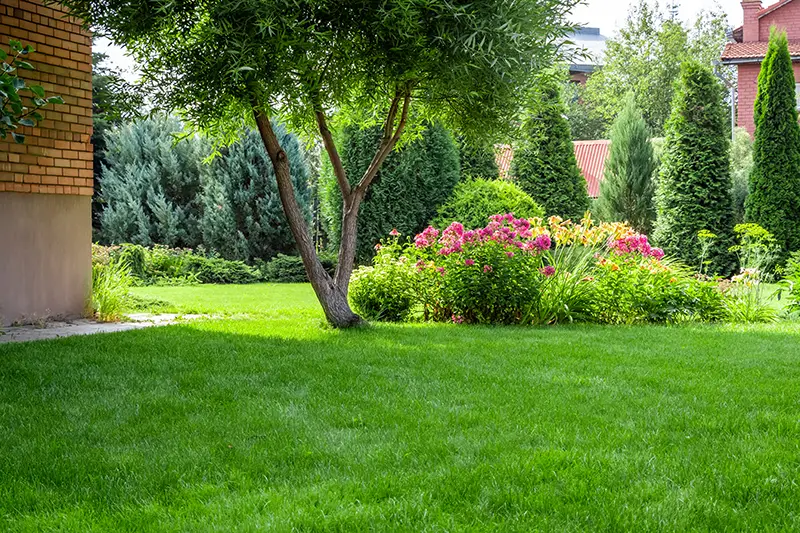
Dappled shade is the most manageable. This is when sunlight filters through an open or elevated canopy and moves across the ground throughout the day. The grass never gets a solid stretch of direct sun, but it gets a reasonable amount of shifting light. Most shade-tolerant grasses handle this well.
Partial shade means the area catches a few hours of direct sunlight daily alongside longer periods of indirect light. It’s workable with the right variety, though.
Full shade describes spaces that rarely see direct sun. This is where your type of grass really matters. You need tolerant species, and you’ll need to manage the lawn more intentionally.
Deep shade is…difficult. If an area gets fewer than three hours of direct sun per day and sits under an unbroken canopy or next to a structure that blocks most light, grass is probably not a realistic solution. Ground covers, mulch beds, or hardscape often make more sense.
The minimum threshold for any shade-tolerant grass to survive is roughly three to four hours of direct sun, or four to six hours of filtered, dappled light. Below that, even the most tolerant varieties will struggle.
The Best Grass Options for Shaded Dallas Lawns
St. Augustine
St. Augustine is the most shade-tolerant of the warm-season grasses. It’s the default recommendation for shaded lawns across the South since it can survive on as little as three to four hours of direct sun daily. Plus, it spreads through above-ground runners called stolons, eventually forming a thick, dense surface that crowds out weeds when it’s healthy.
It’s perfect for Texas because it tolerates summer heat, handles humidity, and grows reasonably well in the sandy, well-drained soils. The downside? It needs consistent watering and regular fertilization to stay dense, and it’s vulnerable to certain pests, like chinch bugs.
Keep in mind that the specific cultivar matters. Standard St. Augustine isn’t bred with shade tolerance as a priority. If you’re planting in a low-light area, look specifically for Seville, Sapphire, Palmetto, or Bitter Blue. These varieties have been selected for their ability to perform well in reduced light.
Zoysia
Zoysia does well in dappled and partial shade conditions. It has a fine-textured, dark green surface with a density that holds up reasonably well under moderate foot traffic. It also grows slowly compared to other grasses, which means less frequent mowing.
The main maintenance issue with Zoysia is thatch. That’s the layer of organic material that builds up between the soil surface and the living blades. Left unchecked, thatch restricts water and air movement. Periodic dethatching or aeration keeps things in balance.
For shade applications specifically, look for the Zeon or Geo cultivars. Both are recognized as the strongest performers in low-light conditions.
Grasses to Skip in Shaded Areas
Bermuda grass is tough, durable, and popular for Texas lawns that get full sun. Howver, even moderate shade causes it to thin out. So if you have a shaded area, Bermuda isn’t your best bet.
Buffalo grass has the same problem. Grasses marketed primarily for drought resistance or durability in Texas summers are almost always full-sun varieties. If the main selling point is heat performance, assume it needs maximum sun exposure to deliver on that promise.
What Problems Pop Up With Shaded Lawns?
Fungal disease. Discolored patches, matted or collapsed turf, and powdery coatings on blade surfaces are common signs.
Fight against disease by watering in the morning, pruning overhead canopies to improve airflow, and avoiding overwatering.
Moss and weeds. Moss typically signals a soil pH imbalance or poor drainage. Weeds moving into the same moist, low-light areas your grass is struggling in are a sign that turf density has dropped enough to leave openings.
You’ll need to address the underlying conditions to avoid these issues.
Grass won’t establish. If an area gets fewer than three hours of sun and sits under dense tree cover, no amount of reseeding will fix it. Some spots genuinely aren’t suitable for turf.
You might just need to go in a different direction. Native plants or a well-designed mulch bed can be good solutions.
How to Choose the Right Grass for Your Yard
Identify your shade type
Is it dappled, partial, or full? Each situation calls for different expectations and sometimes different varieties.
Measure the amount of light
Spend a full day watching the area in question. Count the hours of direct sun separately from filtered or indirect light. People routinely overestimate how much sun a shaded area receives. Actual observation is better than just assuming.
Look at your soil
Sandy soil, clay soil, and compacted soil all behave differently when it comes to drainage and root development. A basic soil test tells you what you’re working with and whether any amendments would help.
Think about how the area gets used
A spot where kids play or dogs run needs a more durable variety than an unused patch under a tree. St. Augustine establishes well in low-traffic shade, while Zoysia handles moderate traffic better.
Factor in the weather in Dallas
The heat, humidity patterns, and seasonal swings across the DFW area all affect which grasses will establish well. Grasses that perform well in the Mid-Atlantic or Pacific Northwest won’t necessarily translate here.
Lawn Care Actions That Help Shaded Areas
Even the right grass variety will struggle without some help.
Water less often, but more deeply
- Shaded areas stay moist longer than open parts of the lawn.
- Irrigating on the same schedule as your sunny zones will lead to overwatering, which accelerates root rot and fungal problems.
- Scale back the frequency and let the soil dry out a bit between waterings.
Mow higher than you would in full sun
- Shade-grown grass benefits from longer blades. The extra leaf surface captures more of the limited light available, which means more energy for root development.
- Cutting it short in shade is one of the fastest ways to weaken it.
Fertilize to battle tree roots
- Tree roots draw aggressively from the same soil your grass depends on.
- A balanced seasonal fertilizer program helps replace what the tree roots take.
Prune the canopy overhead
- If the trees creating the shade have dense, low-hanging branches, raise the lower limbs and selectively thin the canopy.
- Pruning increases the light reaching the lawn below.
- This is often the highest-impact improvement you can make.
Aerate once a year
- Tree roots and reduced biological activity in shaded soil both lead to compaction over time.
- Annual aeration improves how water and fertilizer move through the soil profile.
- It also gives roots more room to spread.
Steps for When You’re Starting from Grass Seed
A few practical steps make a real difference when seeding shaded areas.
- Loosen the soil surface with a rake or aerator before you spread anything. Seeds that sit on top of compacted soil don’t germinate well.
- Apply seed at or slightly above the recommended rate on the package, since lower light means lower germination percentages.
- Cover lightly with a thin layer of topsoil or lawn topdressing to protect the seed from drying out.
- Apply a starter fertilizer to support the seedlings during establishment.
- Keep the area consistently moist for the first two to three weeks.
Shade & Grass FAQs
-
Is there a grass that grows under trees in Dallas?
Yes, St. Augustine, specifically the Palmetto, Seville, or Sapphire cultivars.
-
Which grass needs the least sunlight in warm climates?
St. Augustine handles the lowest light requirements of any common warm-season turfgrass.
-
How do I thicken grass that's thin in shade?
Raise your mowing height, aerate annually, fertilize on a consistent schedule, and prune overhead branches to allow more light through.
-
Can grass survive in full shade?
Most turfgrasses can’t survive in areas with fewer than three hours of daily light.
How to Grow Grass That Grows In Shade in Your Yard
Diagnosing a shaded lawn from general advice only goes so far. The right recommendation depends on your actual light levels, soil conditions, the specific trees overhead, and how the space gets used day to day.
GroGreen’s team evaluates those conditions directly and builds a lawn care plan based on what your yard actually needs. Our technicians handle aeration, soil amendments, fertilization programs, and more for the specific demands of turf in Dallas.
GroGreen serves these DFW communities:
Addison | Allen | Anna | Aubrey | Balch Springs | Carrollton | Cedar Hill | Celina | Coppell | Dallas | Desoto | Duncanville | Flower Mound | Frisco | Garland | Grand Prairie | Hutchins | Irving | Lancaster | Lavon | Lewisville | Little Elm | McKinney | Melissa | Mesquite | Nevada | Plano | Princeton | Prosper | Richardson | Rockwall | Rowlett | Sachse | Seagoville | Sunnyvale | The Colony | Wilmer | Wylie | Murphy | Parker | Lucas | Fairview | St Paul | Hebron | Lowry Crossing
Blog Contributor: James Duhon
James Duhon serves as Branch and Area Manager for GroGreen in Plano, with 20 years of experience. He is licensed by the Texas Department of Agriculture for both lawn care and structural pest control. His background gives him a strong perspective on service standards, customer satisfaction, team leadership, and practical lawn and pest care expertise.